Introduction
The agricultural industry is on the verge of a fundamental transformation—one driven by the integration of robotics, artificial intelligence, environmental sensors, and real-time data analytics. Challenges such as labor shortages, rising input costs, climate change, and the need for sustainable production have pushed agriculture into the era of “smart automation.”
In this context, a new wave of intelligent machines has emerged—machines that don’t just perform agricultural tasks, but analyze, learn, make decisions, and interact with their environment with remarkable precision.
Below are five of the most important smart agricultural machines, introduced by their scientific/non-commercial names, which today play crucial roles in modern farming systems worldwide.
1. Autonomous Weed Management Robot
This is a small ground-based self-driving robot that uses a combination of computer vision, artificial intelligence, and advanced plant-monitoring systems to detect and eliminate weeds without harming the main crop.
Key Features:
Precise weed identification using multispectral cameras
Mechanical removal or targeted micro-spraying directly onto weeds
Reduces pesticide use by 70–90%
Prevents soil and water contamination
Ideal for row crops such as wheat, soybeans, corn, and vegetables
This machine effectively replaces manual weeding labor—an increasingly scarce and costly resource in many agricultural regions.
2. Precision Plant-Care Robot
This robotic system is designed for crops that require highly delicate care, such as strawberries, tomatoes, greenhouse vegetables, and sensitive orchard products.
Capabilities:
Evaluates leaf health using multispectral imaging
Detects fungal diseases before visible symptoms appear
Removes infected or damaged leaves
Adjusts humidity, light, and airflow for optimal plant conditions
Prevents quality loss and increases profitability
In essence, this device acts as an intelligent plant doctor, shifting plant health management from reactive to preventive.
3. Autonomous Field-Data Rover
A ground-based, four-wheel autonomous rover equipped with various sensors, this machine navigates the farm independently, collecting and analyzing the data essential for precision agriculture.
Core Functions:
Measures soil moisture at multiple depths
Monitors plant health using thermal and optical sensors
Generates 3D maps of field conditions
Analyzes growth status in real time and sends insights to farm-management systems
Assists in determining optimal irrigation, fertilization, and spraying times
This rover serves as the backbone of data-driven agriculture, enabling farmers to make informed, scientific decisions.
4. Fully Autonomous Agricultural Tractor
A next-generation tractor capable of performing heavy agricultural operations without a driver, relying on advanced navigation and sensing technologies.
Capabilities:
Centimeter-level precision in plowing and leveling
Automated seed planting with accurate depth and spacing
Autonomous spraying and loading operations
Obstacle detection with radar, LiDAR, and GPS
Performs nighttime operations safely and efficiently
These tractors significantly reduce production costs while enhancing overall farm productivity.
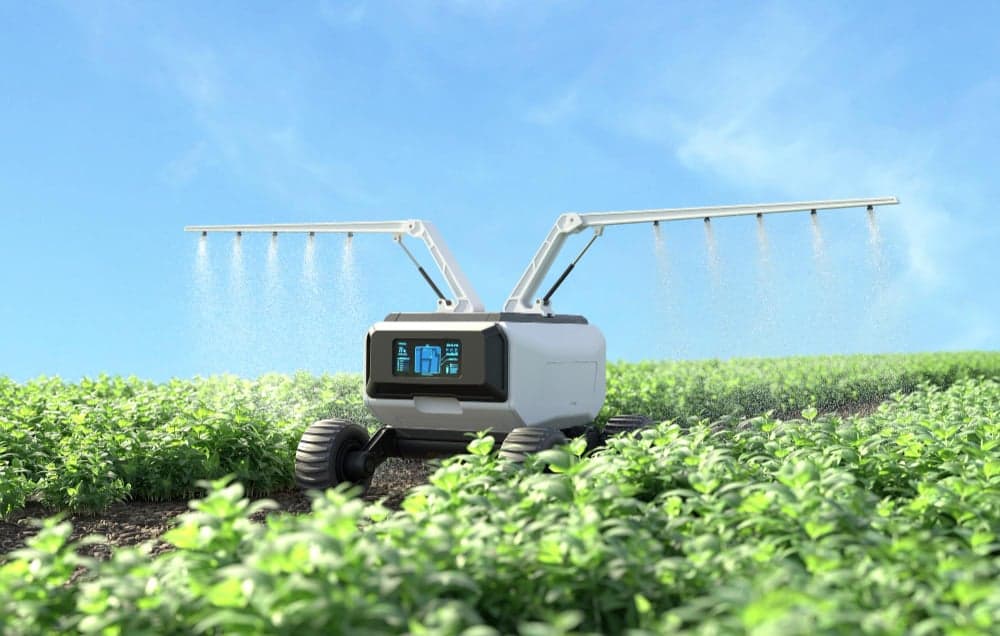
5. Smart Precision-Spraying Unit
A highly advanced spraying system designed to minimize input use and reduce environmental contamination.
Primary Functions:
Detects diseases, pests, or nutrient deficiencies using spectral imaging
Applies pesticides, fertilizers, or micronutrients only to targeted areas
Reduces chemical waste and drift
Protects soil and water resources
Suitable for orchards, vineyards, and large-scale farms
This system transforms agriculture from “high input consumption” to targeted and scientific input management.
Conclusion
Smart agricultural machinery marks the beginning of a new wave of technology-driven farming. These tools help farmers:
Increase productivity while reducing costs
Improve both the quality and quantity of their yield
Significantly reduce water, fertilizer, and pesticide use
Adapt to climate change
Achieve more sustainable and profitable agricultural systems
These technologies are reshaping the future of agriculture, steering it toward automated, intelligent, and data-centric systems.


