Introduction
Modern farms are generating more data than ever before. Soil sensors, weather stations, machinery, drones, satellite imagery, and crop monitoring systems can continuously provide information about what is happening across a farm.
But collecting data is not the same as understanding it.
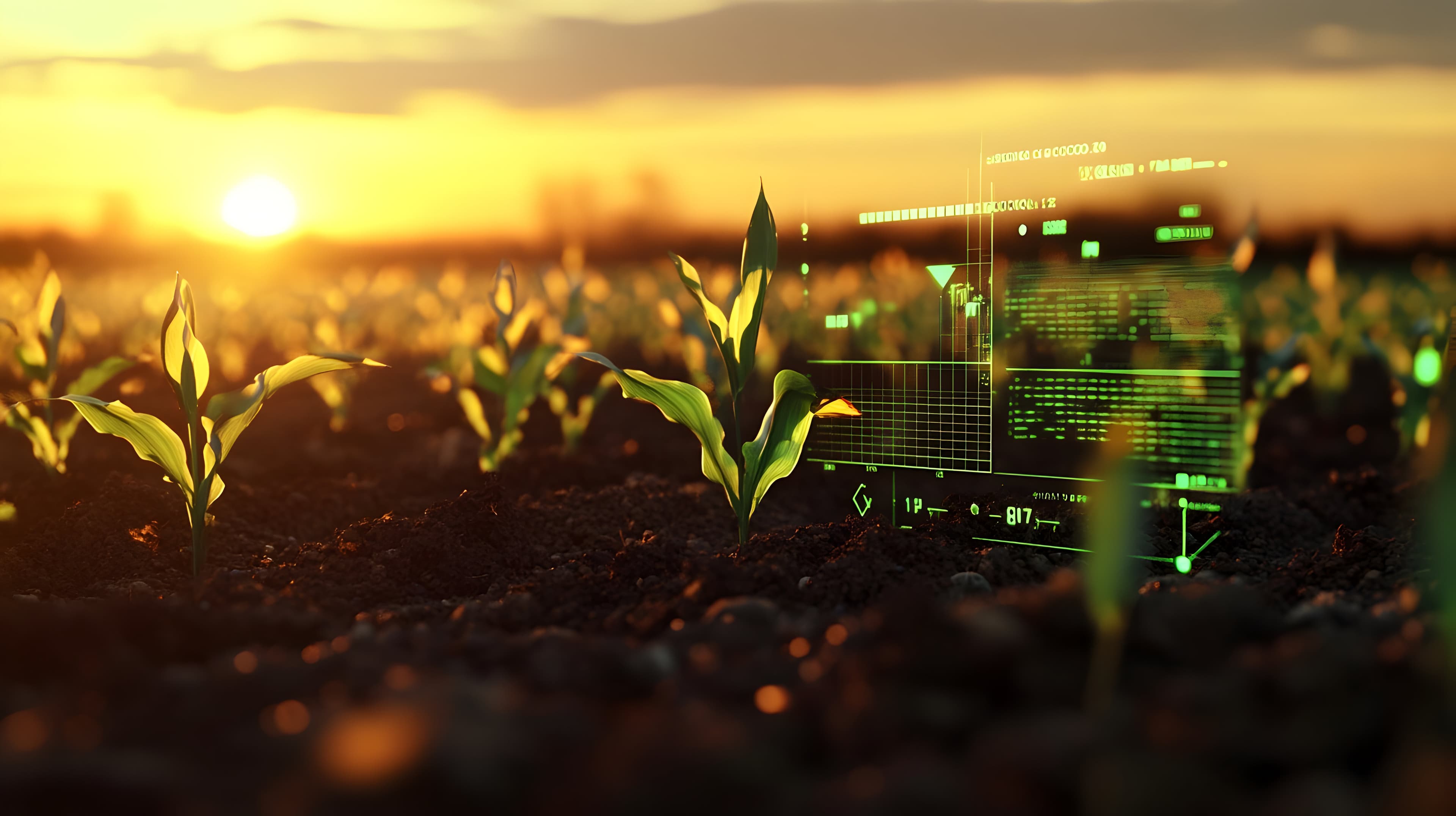
Digital Twin technology offers a different approach. Instead of viewing each source of information separately, a Digital Twin creates a dynamic virtual representation of a physical agricultural system. This virtual model can be continuously updated with data from the real farm, helping farmers understand current conditions, explore possible scenarios, and make more informed decisions.
The idea is not simply to create a digital copy of a farm. The real value lies in creating a connection between the physical farm, its data, analytical models, and the decisions made in the field.
How Does an Agricultural Digital Twin Work?
An agricultural Digital Twin can combine information from multiple sources, including soil and environmental sensors, weather data, machinery, remote sensing, UAV imagery, and crop observations.
These data streams feed a virtual representation of the agricultural system.
Within this environment, models and analytical tools can be used to interpret current conditions and, in more advanced systems, simulate possible future scenarios.
The basic process can be understood as:
Physical Farm → Data Collection → Digital Twin → Analysis & Simulation → Decision Support → Physical Farm
For example, rather than relying only on a soil-moisture reading, a Digital Twin could potentially combine soil conditions with weather forecasts, crop development, irrigation infrastructure, and historical information to evaluate different irrigation strategies.
This ability to connect multiple sources of information is what separates the Digital Twin concept from simple farm monitoring or a static digital model.
Where Can Digital Twins Be Used in Agriculture?
The potential applications extend across different parts of agricultural production.
In crop production, Digital Twins can support the integration of information related to crop development, soil conditions, irrigation, fertilization, pest management, and environmental conditions.
In controlled-environment agriculture, such as greenhouses, the concept becomes particularly interesting because sensors and control systems are already widely used. A Digital Twin can connect information about temperature, humidity, light, CO₂, irrigation, and crop conditions within the same virtual environment.
Digital Twins are also being explored for agricultural machinery and robotics, where virtual representations can contribute to operational monitoring, predictive maintenance, navigation, and increasingly autonomous operations.
Beyond production itself, research has also explored applications in livestock management, postharvest operations, and agricultural supply chains.
This means that the long-term concept may extend beyond creating a Digital Twin of an individual crop or machine. Multiple digital representations could eventually become part of a broader farm-level system supporting coordinated decision-making.
The Challenge Is Not Creating the Twin, but Making It Useful
Despite its potential, agricultural Digital Twin technology is still developing.
Agriculture presents a particularly difficult environment for digital modelling. Farms are biological systems influenced by weather, soil variability, plant development, management practices, machinery, and many other interacting factors.
Recent research also highlights another important challenge: interoperability.
Agricultural technologies often come from different manufacturers and platforms. Sensors, machinery, farm-management software, weather systems, and analytical tools may store and communicate information differently.
A 2026 systematic literature review found that although research on agricultural Digital Twins is expanding, major gaps remain in standardized architectures, integration between different agricultural assets, interoperability, and large-scale field validation.
Real-world validation is particularly important.
For example, a 2026 systematic review focused on agricultural machinery and robotics found substantial technological progress but reported that fewer than 10% of the studies it examined provided rigorous numerical validation at field level.
This distinction matters.
A sophisticated virtual model does not automatically become a useful agricultural decision-making system. Its recommendations are only as reliable as the data, models, assumptions, integration, and validation behind them.
Conclusion
Digital Twins represent an important evolution in digital agriculture because they shift the focus from simply collecting agricultural data toward creating systems that can interpret, simulate, and potentially act on that information.
Their greatest value may not come from producing a perfect virtual copy of a farm.
Instead, it may come from connecting previously fragmented information — crops, soil, weather, machinery, irrigation, and management — into a continuously updated decision-support environment.
However, the technology should not be viewed as a finished solution.
Interoperability, model accuracy, data quality, scalability, economic feasibility, and real-world validation remain significant challenges.
In my view, the future of Digital Twins in agriculture will depend less on how visually or technically sophisticated the virtual farm becomes and more on whether it can consistently help farmers make better decisions in the physical one.
References
Nasirahmadi, A. et al. Agricultural Digital Twin for Smart Farming: A Review. Green Technologies and Sustainability, 2026, 4(2), 100299. DOI: 10.1016/j.grets.2025.100299.
Digital Twins in Agriculture: A Systematic Literature Review on Modeling, Semantics, and Interoperability. Smart Agricultural Technology, 2026, Vol. 14, 102283. DOI: 10.1016/j.atech.2026.102283.
Pylianidis, C., Osinga, S. & Athanasiadis, I.N. Digital Twins in Agriculture: A State-of-the-Art Review. Smart Agricultural Technology, 2023, Vol. 3, 100094. DOI: 10.1016/j.atech.2022.100094.
Digital Twins in Agriculture: Orchestration and Applications. Journal of Agricultural and Food Chemistry, 2024, 72(19), 10737–10752. DOI: 10.1021/acs.jafc.4c01934.
Tagarakis, A.C. et al. Digital Twins in Agriculture and Forestry: A Review. Sensors, 2024, 24(10), 3117. DOI: 10.3390/s24103117.
Awais, M. et al. Advancing Precision Agriculture Through Digital Twins and Smart Farming Technologies: A Review. AgriEngineering, 2025, 7(5), 137. DOI: 10.3390/agriengineering7050137.
Integrated Digital Twins for Agricultural Machinery and Robotics: A Systematic Review of Architectures, Quantified Impacts, and Deployment Gaps. Journal of Agriculture and Food Research, 2026, Vol. 29, 103051. DOI: 10.1016/j.jafr.2026.103051.


